
On this page
Choosing a preschool is partly about a programme and largely about the people and routines your child will meet every day. A bright classroom photograph can start a conversation, but it cannot show how an educator settles an upset child or keeps parents informed. A useful comparison brings those everyday details into view.
For families considering early learning in Robertsham, Allied Castle for Kids is at 188 Kimberley Road. The campus welcomes children from 3 months through Grade 3. That span includes different care and learning stages: a baby’s day should not be described as a smaller version of a Grade R timetable. Ask which group your child would join and how that particular group works.
Start with the day your child will actually have
Write down your child’s current feeding, sleeping, toileting and settling routines before visiting. Share the essentials with the team and ask what can be accommodated. A realistic conversation about a child who still needs a nap is more useful than a general promise of individual attention.
Ask for an example of a normal day rather than a special event timetable. Where do active play, quiet time, meals, stories and outdoor experiences fit? Find out how a child moves between activities, who helps at those transitions and what happens when a child needs more time. Consistency need not mean that every child is expected to respond identically.
Observe the quality of interaction
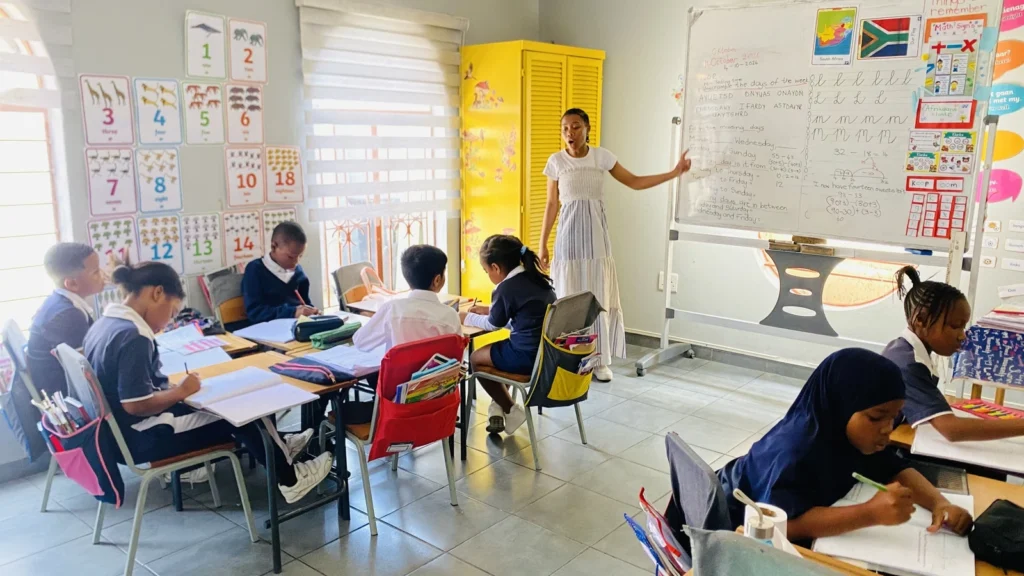
During a visit, pay attention to how adults speak with children. Do they listen, explain and help children take turns? Are children comfortable asking for help? You do not need to interrupt a lesson to learn something: a few ordinary moments often reveal more than a carefully arranged display.
Ask how educators get to know a new child’s interests and needs. A useful answer might describe observation, conversations with parents and a settling plan. Ask how progress is shared and who will discuss concerns with you. Avoid judging the whole environment by whether children look quiet for the few minutes you are present.
Look at play with a learning lens
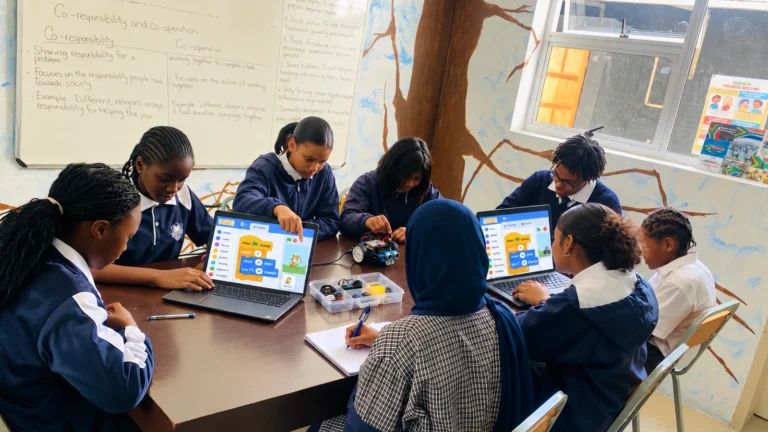
An early learning environment should give parents concrete examples of what children do. Building, sorting, drawing, stories and pretend play can all prompt conversation, exploration and problem-solving. Ask the educator to explain the purpose of an activity and how it is adjusted for the group, rather than looking only for finished worksheets.
Consider access as well as appearance. Can children reach appropriate resources? Is there room to move and somewhere to settle? If outdoor play is shown in the gallery, ask when the relevant group uses that space and what supervision looks like. A photograph is a starting point for verification, not a guarantee that every activity runs every day.
Ask specific questions about care and safety
Find out how the school handles authorised collection, changes to collection arrangements and communication during the day. Ask where medication instructions are recorded and whom to contact about an allergy or a health concern. Request the current written policies rather than relying on an informal assurance during a busy tour.
You can also ask what information the school needs from you before the first day. Relevant details may include emergency contacts and routines that help your child settle. Keep sensitive documents within the school’s approved application or communication route; a public social media comment is not an appropriate place to share them.
Compare communication before you commit
Decide what good communication means for your family. A parent of a baby may prioritise feeding and rest information, while a parent preparing for Grade R may want to understand learning and adjustment. Ask which channels the campus uses, how urgent messages are handled and when a longer discussion can be arranged.
Test the process with a real question. For example: “If my child has been unsettled for several mornings, who should I speak to and what would happen next?” The response should help you understand the process without suggesting that every concern has an instant solution.
Understand the next transition and the full cost
Castle for Kids continues through Grade 3. Ask how transitions between its groups and grades are managed and what families should plan for after Grade 3. Do not assume that a place at a later campus is automatic; discuss the relevant admissions process and availability when it becomes necessary.
Use the current Allied fee information for the applicable branch and group. Read registration, tuition and any optional services separately. Ask what the quoted amount includes and request a written explanation of anything unclear. A monthly figure alone cannot tell you what a full year will require.
Make a short, useful visit plan
- Confirm the group and age range relevant to your child.
- Ask about settling, daily care and parent communication.
- Observe an ordinary learning or play space where access is permitted.
- Discuss collection arrangements and current policies.
- Check the fee schedule and the next admissions step.
Compare your notes after the visit while details are fresh. Separate what you saw from what you still need to confirm. If you are comparing several settings, use the same questions each time so a polished presentation does not outweigh an important practical need.
Questions parents often ask
Is the same programme appropriate from 3 months to Grade 3?
No single daily routine suits that entire range. Ask the campus about the specific care group or grade, its activities and the transition into the next stage.
Can I choose only from photographs?
Photographs help you identify questions, but a visit and a conversation about your own child are more informative. Ask about the current use of the spaces you have seen online.
If group names are still unclear, read the daycare, preschool and Grade R comparison before your next conversation with the branch.
To take the next step, book a Castle for Kids tour or read the admissions information. Bring a short list of your child’s needs and the questions that matter most to your family.
Fees, programme availability and admissions arrangements can change. Check the current branch information and speak to the relevant team. Our editorial standards.
Published 24 November 2026 · Updated 24 November 2026